As Da Nang is being developed under the model of a “creative, green, and livable city,” with an emphasis on creative spaces and community art, art plays a vital role in shaping the city’s urban aesthetic landscape.
Traditional Art Spaces
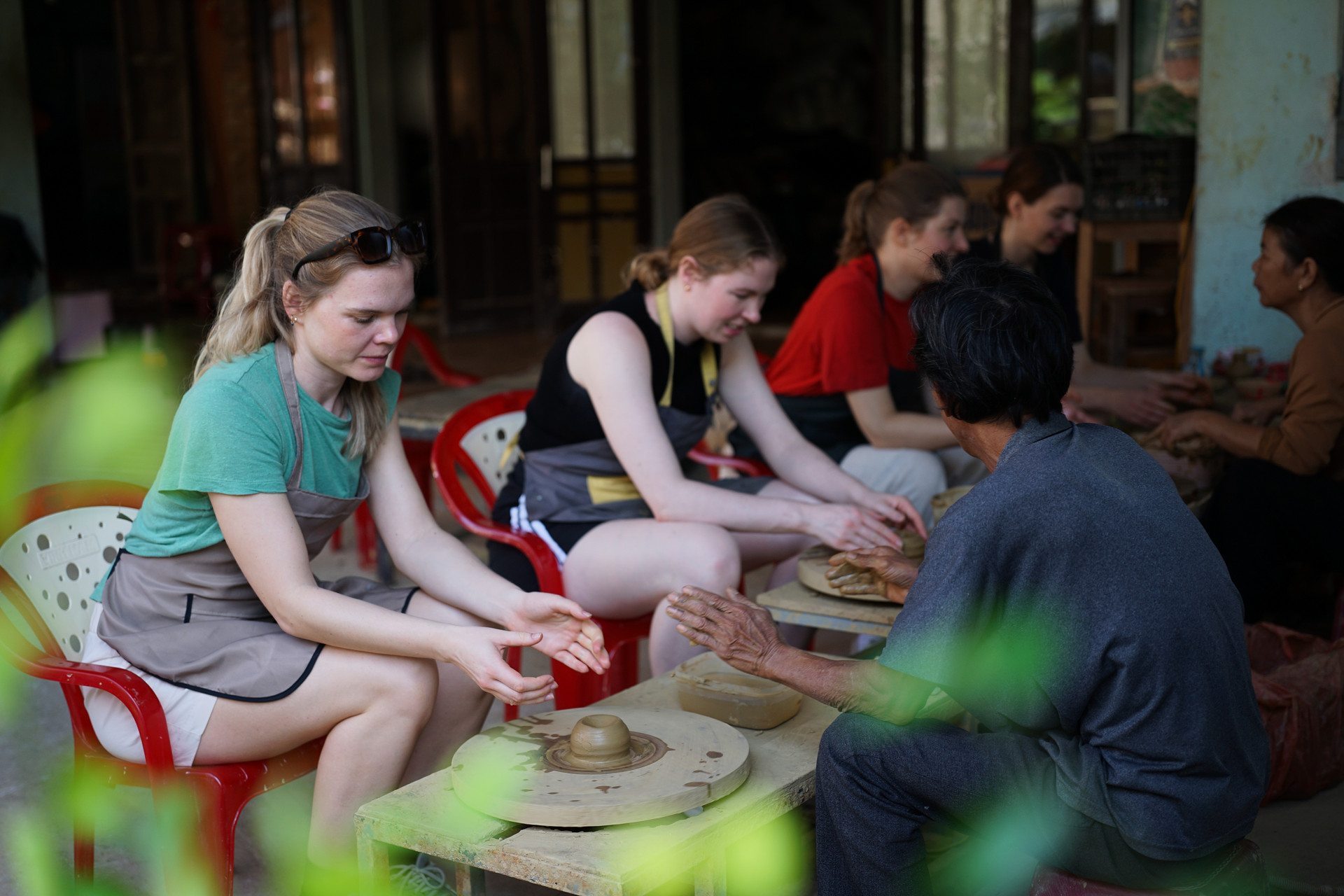
Recently, Thanh Ha Pottery Village (Nam Dieu Hamlet, Hoi An Tay Ward) was recognized by the Ministry of Culture, Sports and Tourism as the Best Community Tourism Destination of 2025. Generations of artisans in Thanh Ha continue to remind one another to preserve and develop the village’s pottery space and craft values—not merely as a traditional craft village, but as a living space that integrates culture, art, and sustainable tourism.
Le Van Nhat (born in 1988), a young-generation potter from Thanh Ha, recalled his participation in a series of tourism activities along the eastern bank of the Han River toward the end of 2025. There, his creative ceramic products attracted considerable attention from visitors, who enjoyed hands-on experiences such as shaping traditional clay figurines and creating custom cartoon character sculptures.
More recently, Nhat’s ceramic model of the Japanese Covered Bridge in Hoi An was selected by the Da Nang People’s Committee as a Typical Rural Industrial Product of Da Nang City in 2025 in the handicrafts category. He shared that he is currently focusing on compact, modern ceramic products designed as souvenirs—aligned with consumer tastes while still retaining the distinctive cultural spirit of Hoi An.
Mr. Bui Van Dung, Deputy Secretary of the Party Committee and Chairman of the People’s Committee of Hoi An Tay Ward, emphasized that the locality aims to position Thanh Ha Pottery Village not as an isolated destination, but as a key node within the broader cultural tourism–craft village–ecological tourism space of Hoi An Tay Ward and Da Nang City as a whole.
Hoi An Tay Ward, along with Hoi An and Hoi An Dong wards and Tan Hiep island commune, were formerly part of Hoi An City, now reorganized administratively into the “three wards, one city” structure. In 2023, Hoi An officially joined UNESCO’s Global Network of Creative Cities in the field of crafts and folk art. Within this context, Kim Bong Carpentry Village, Thanh Ha Pottery Village, Bay Mau Coconut Forest, and traditional art activities along the Hoai River continue to represent enduring cultural values within the ancient urban space.
According to cultural researcher Ho Xuan Tinh, these localities could move toward establishing a unified cultural corridor stretching from the ancient town to Cu Lao Cham Island, as well as heritage sites within and around the old town. Such an approach would facilitate more effective management and help avoid cultural fragmentation.
Creative Spaces and Community Art
In recent years, images of urban Da Nang, along with its villages, riverbanks, and the people of Quang region, have been preserved and shared by the local art community—especially young artists—through creative visual artworks and cultural events.
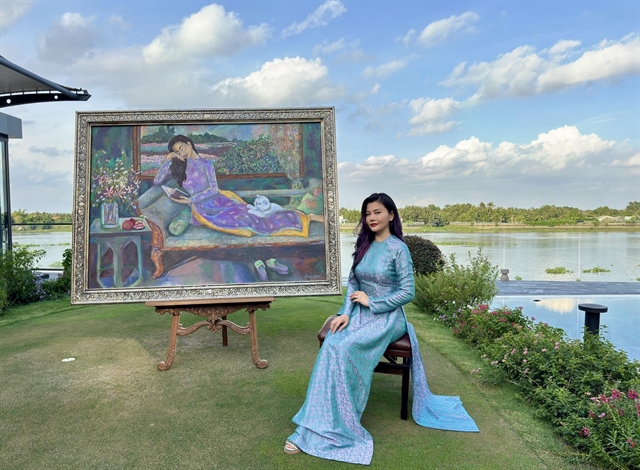
Most recently, the art exhibition “Dear Da Nang” was held at the Da Nang Fine Arts Museum, initiated and organized by the Global Shapers Community Da Nang in collaboration with the museum. Earlier in 2025, other notable events included the exhibitions Thuong and Just Like That at Hilton Da Nang; The Vietnamese Ao Dai on Bach Dang Pedestrian Street; and the program Co Tu-Gether: Walking the Village Together at the Da Nang Cultural Heritage Festival 2025.
These events aim to foster a community art space where young people can tell the story of Da Nang through their love for the city, while also attracting visitors to explore and experience local culture. In doing so, they open new pathways for the development of community-centered art spaces within the urban fabric of Da Nang.
According to painter Ho Dinh Nam Kha, Head of the Da Nang Chapter of the Vietnam Fine Arts Association, as Da Nang pursues its vision of becoming a “creative, green, and livable city,” fine arts will play an essential role in shaping its urban aesthetic identity.
Painter Nam Kha suggests planning and developing a network of public art spaces along rivers, coastal areas, and the city center—such as art parks, mural streets, sculpture gardens, and light bridges. He also proposes supporting the creation of a “Da Nang Art Village,” a gathering place for artists, designers, architects, and creative practitioners, alongside regular exchanges, exhibitions, and art workshops. Old neighborhoods, factories, and warehouses could be transformed into creative hubs, mural villages, and artistic production spaces.
Within this vision, Da Nang’s Creative Hub could be developed by leveraging the city’s strengths as a young, dynamic, and globally connected coastal city, while drawing from the depth of Cham cultural heritage, public art, and creative tourism. This space could become a “creative harbor,” connecting local and international artists and serving as a testing ground for digital art, street performances, and contemporary art design.
Notably, integrating fine arts into public works, tourism spaces, and city branding efforts would help shape Da Nang as an “open-air gallery” of Vietnam. These spaces would not only beautify the city but also generate economic value, attract visitors, and enhance community well-being—bringing art closer to everyday life.